

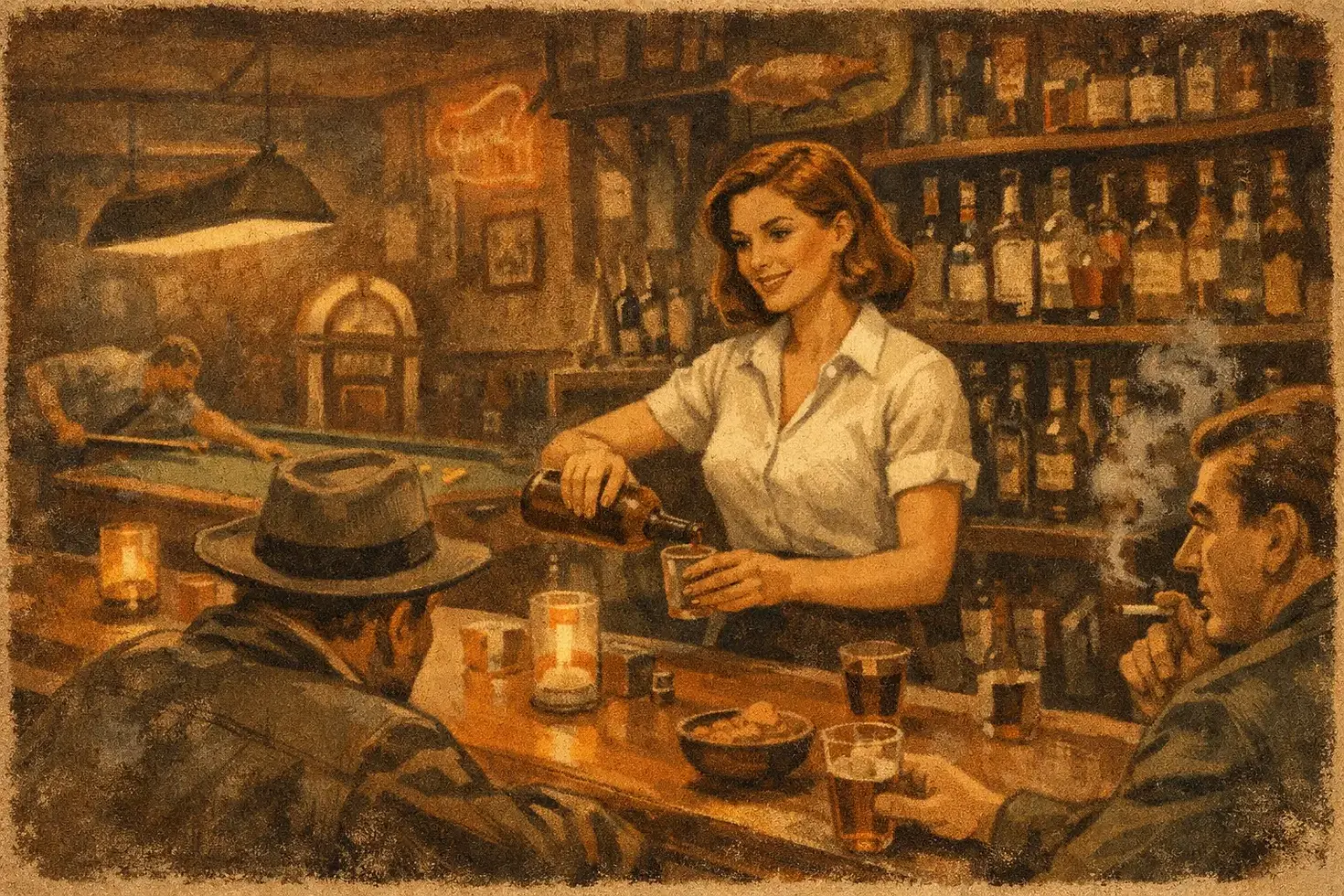
What Makes a Dive Bar, Really?

You can tell within about thirty seconds. The lights are a little low, the stools have seen some things, and nobody in the room is trying too hard. That’s usually where the question starts - what makes a dive bar feel like the real thing instead of a place playing dress-up in neon signs and fake nostalgia?
The short answer is this: a true dive bar earns its identity over time. You can’t flat-pack one together with reclaimed wood, a jukebox app, and a menu full of twelve-dollar “elevated” bar snacks. A dive bar is built out of habit, history, regulars, strong drinks, and the kind of wear-and-tear that comes from years of actual use. It’s not polished because polish was never the point.
What makes a dive bar more than a theme
A dive bar is often described by what it is not. It’s not precious. It’s not curated for social media. It’s not built around bottle service, velvet ropes, or bartenders who act like they’re doing you a favor by making eye contact. But that still doesn’t quite get to the heart of it.
What makes a dive bar is a mix of atmosphere and honesty. The room tells the truth. Maybe the floor’s a little scuffed. Maybe the sign out front has been buzzing longer than some customers have been alive. Maybe the beer list isn’t trying to impress anybody. Good. That’s part of it.
The bigger piece is that the place feels lived in. There’s history in the walls, even if nobody can tell you every chapter. People have celebrated there, blown off steam there, lost a game of pool there, made up after a fight there, and probably told a lie or two that got better with every round. A dive bar holds all of that without making a speech about community. It just is community.
History matters, but age alone isn’t enough
People love to say an old bar is a dive bar just because it’s old. Not always. Plenty of old places are just old. A real dive bar has staying power, sure, but it also has attitude and consistency.
Age helps because time leaves fingerprints. The best dive bars have stories, and even when those stories get exaggerated, that only makes them more believable. But history on its own doesn’t seal the deal. If a place gets scrubbed up so thoroughly that it loses all its edges, or starts chasing trends so hard it forgets its regulars, it can stop feeling like a dive even if it opened before your grandparents met.
That’s the trade-off. You want a bar to be cared for, but not fussed over. Clean enough to be comfortable, rough enough to feel real. Nobody wants sticky menus and mystery smells. At the same time, if the place looks like it was assembled yesterday by a branding team trying to manufacture "grit," people can smell that too.
The regulars are half the furniture
If you want to know what makes a dive bar, look at who walks in without checking their phone first. Look at who knows where to sit, what to order, and when the bartender’s going to slide over another round without a whole performance around it.
Regulars give a dive bar its backbone. They create the tone of the room. They remember names, nicknames, and stories that should probably stay buried. They also test whether a place is the real thing. In a good dive bar, regulars don’t make newcomers feel like intruders. They make the room feel established. There’s a difference.
That’s one of the most misunderstood parts of dive bar culture. Outsiders sometimes assume these places are cliquey or hostile. Bad bars can be. Good ones aren’t. A real neighborhood tavern knows how to be familiar without being closed off. You can walk in solo, order a drink, catch a game, play a little pool, and feel like you belong there even if it’s your first visit.
That kind of welcome can’t be faked. It comes from bartenders who know how to read a room and customers who understand the unspoken rules - don’t act like a fool, don’t start trouble, tip like you mean it, and don’t be surprised if the best conversation of your week happens next to a guy in work boots who just came in for one beer and stayed for three.
Strong drinks, fair prices, no speech required
Let’s not dance around it. Drinks matter.
A dive bar doesn’t need a menu that reads like a chemistry project. Nobody’s asking for smoked rosemary foam or a ten-minute origin story about the gin. What people want is a cold beer, a decent whiskey, a mixed drink with some backbone, and a tab that doesn’t make them regret leaving the house.
That doesn’t mean every dive bar has to be dirt cheap. Prices are what they are, and every town has its own math. But value matters. People should feel like they got an honest pour for an honest price. That’s part of the social contract.
Food works the same way. A dive bar doesn’t need to pretend it’s a fine dining spot. It just needs to serve the kind of stuff people actually want with a drink - tacos, burgers, fries, wings, maybe a special that gives folks a reason to swing by on a Tuesday instead of heading home. Simple works when it’s done right.
The room should have a little grit
There’s a line between character and neglect, and good dive bars know it. The room can be beat-up without being beat-down. A little grit is part of the charm. Too much and it stops being fun.
That’s where people get confused. They think what makes a dive bar is mess, darkness, or chaos. Not really. Some of the best ones are tidy enough. What they have is texture. Old wood. Dented rails. Faded signs. Pool cues with mileage on them. Barstools worn smooth by years of elbows and conversations that got louder after midnight.
Nothing has to match. In fact, it’s better when it doesn’t. The room should feel collected, not staged. If every detail looks hand-selected to signal authenticity, chances are authenticity left the building.
A dive bar should also sound right. Not quiet, not sterile, and not so loud you need to yell your life story. You want the good kind of bar noise - clink of glasses, somebody laughing too hard, a little jukebox bleed, maybe the crack of pool balls from the back. That soundtrack tells you the place is alive.
Entertainment helps, but it has to fit the room
Pool tables, bar games, live music, karaoke, trivia, weekly specials - all of that can belong in a dive bar. None of it is required. The real question is whether it feels natural.
Some bars use entertainment like a costume. They stack the calendar with events because the room itself doesn’t give people much reason to stay. In a real dive bar, the extras should feel like an extension of the place, not a distraction from it.
Pool is a great example. In the right bar, a pool table does more than fill a corner. It gives strangers something to do besides stare at their drinks. It builds rivalries, routines, and stories. Same goes for weekly specials. People come back for the deal, but they stay because the room already fits.
That’s part of why long-running neighborhood spots matter. They become part of local rhythm. Folks know what happens on certain nights. They know where to go after work, after a game, after a long week, or when they just need a strong drink and a few loud laughs. That kind of routine is hard to beat and even harder to fake.
You know it when the bar stops trying to impress you
Maybe that’s the clearest answer to what makes a dive bar. It doesn’t perform authenticity. It just has it.
A real dive bar isn’t chasing approval from people who only like it as an aesthetic. It exists for the people who actually use it. The regular with the usual. The couple splitting fries at happy hour. The crew fresh off shift. The traveler who wandered in hoping to find something local and got exactly that.
That’s why places with history tend to hit different. They’ve had time to become part of people’s lives. They’ve hosted birthdays, breakups, first dates, bad ideas, good stories, and all the little nights that don’t seem important until years later when somebody says, remember that place?
If a bar has that kind of pull, if it feels unpolished in the right ways, if the drinks are honest, the crowd is real, and the room seems comfortable in its own skin, you’re probably not looking at a bar that wants to be called a dive bar. You’re just in one.
And if you’re lucky enough to have a place like that nearby - maybe even one like The Tumble Inn - treat it well. Order a drink, tip your bartender, rack the balls, and add your own story to the walls.


Comments